Hurricane Season Tree Prep in Baton Rouge: A Homeowner's Checklist
Trees meet hurricane season exactly as they are - every defect they grew all year is the defect the storm grades.
Read the Guide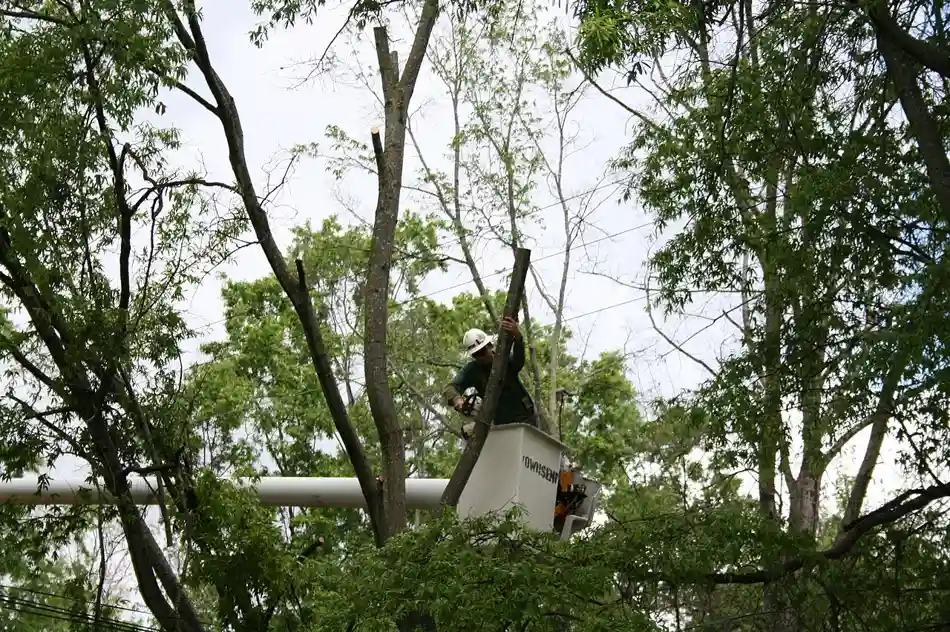
A crew offers to 'top' or 'hat-rack' your oak so it survives hurricane season - and it sounds like protection.
Problem: A crew offers to 'top' or 'hat-rack' your oak so it survives hurricane season - and it sounds like protection.
Solution: Topping is the opposite: it destroys structure, invites decay, and regrows a crown of weakly attached sprouts that fails worse in the next storm.
When to call: Ask instead for structural pruning, crown cleaning or a proper crown reduction to lateral branches - and walk away from anyone who recommends topping a shade tree.
Every spring in Baton Rouge, the topping crews make their rounds, and every fall the topped trees make the storm news. Topping - cutting a tree's main limbs back to stubs, whatever the sales name - is the single most destructive practice still sold as tree care. This guide explains, mechanically and biologically, what topping does to the tree you paid to protect, how to recognize the pitch in its many costumes, and what to ask for instead: the real techniques that reduce risk without ruining the tree.
August 2016 taught the region what its water can do. When the Amite and Comite rivers rose, Denham Springs and the eastern parishes flooded street by street - and trees that stood in water for days came out of it stressed, root-damaged and slow to show it. Flood stress, drought stress (the dry fall of 2023 killed stressed trees across the region), lightning, and construction damage all write themselves into a tree years before the tree falls. Reading that handwriting early is most of what an arborist sells.
A topped tree loses its crown's architecture in one afternoon. The cuts land mid-limb, where the wood is too large to close and too exposed to defend; decay fungi colonize the stubs and travel down into the trunk's structure. The tree, starving from the sudden loss of its leaf area, spends its reserves on emergency regrowth - a thicket of sprouts from the cut ends.
Those sprouts are the cruelest part of the transaction. They attach only to the surface of the rotting stub, not to deep wood the way a natural branch does, and they grow with abnormal speed into long, heavy, sail-catching limbs. Within five to ten years the topped tree carries a crown that is larger than the original, mounted on attachments weaker than the original, above wood more decayed than the original. Every parameter the owner paid to improve has been made worse.
The pitch leans on hurricane fear, so examine it on hurricane evidence. Post-storm studies across the Gulf consistently find topped trees among the worst performers: the weak regrowth snaps at its attachments, and decayed trunks fail at the stubs. Arborists have a saying from the cleanup work - they can map a neighborhood's topping history from its storm damage pattern.
The physics explains the finding. Wind load is not simply about crown size; it is about how the crown moves, and a sound, structurally pruned tree flexes and sheds wind through its interior branching. A topped tree's regrowth is a set of rigid levers on rotten pivots. The practice sold as storm preparation is, on the evidence, storm preparation's opposite - and it also commonly voids the tree's welcome with insurers and informed buyers who know the silhouette on sight.
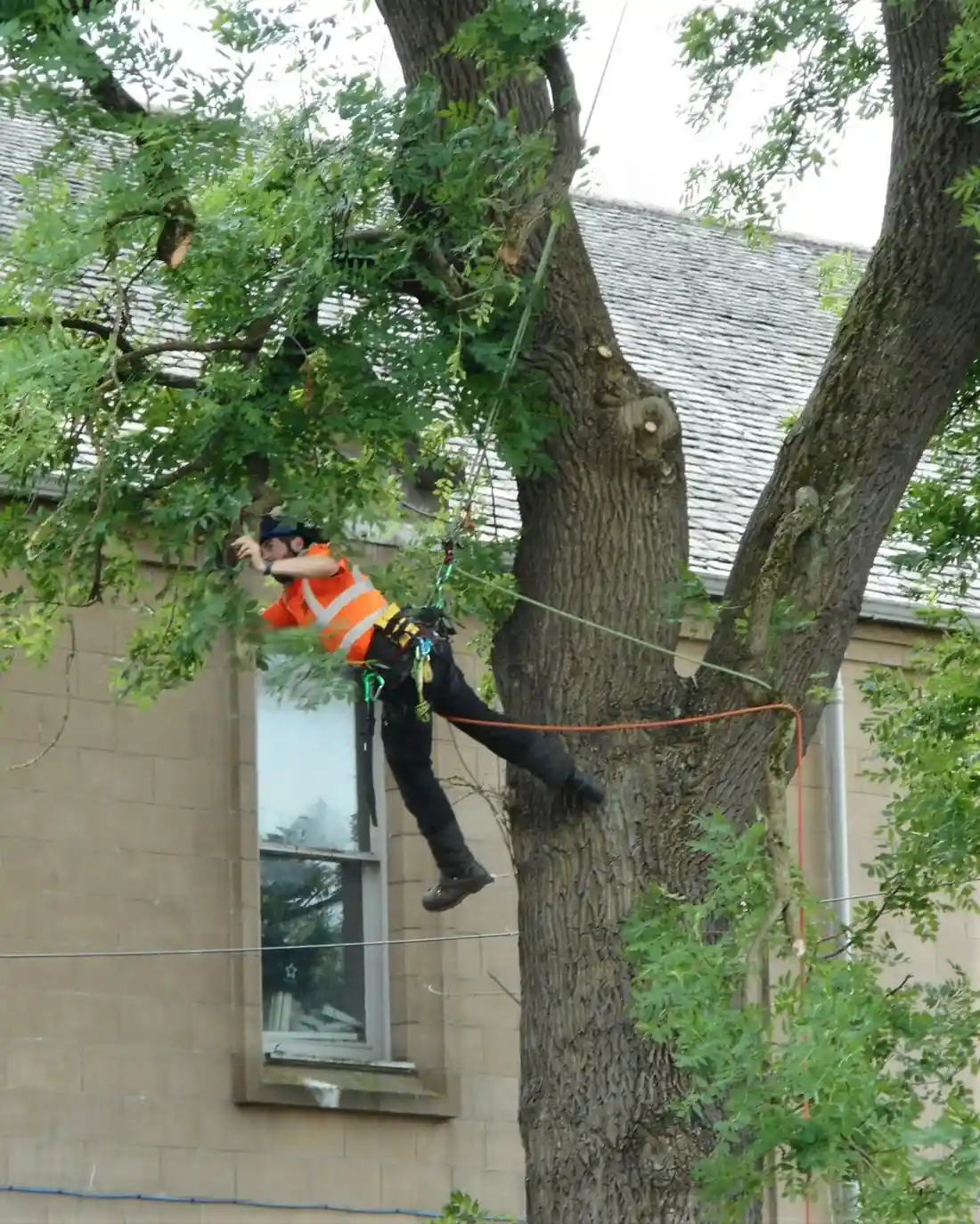
Few crews say 'topping' anymore. The synonyms rotate: 'hat-racking,' 'rounding over,' 'dehorning,' 'canopy lifting' (a real term, misapplied), and the hurricane special - 'we'll take thirty percent off the top so the wind can't catch it.' Any proposal whose method is cutting the main stems back by a percentage, rather than removing specific defective branches at their junctions, is topping wearing a name tag.
The test questions expose it in a sentence each. 'Where exactly will the cuts land - at branch junctions, or mid-limb?' 'What diameter will the largest cut be?' 'Will the tree keep its natural form when you are done?' A structural pruner answers all three precisely and shows you the target branches from the ground. A topper gestures at the crown and talks about the total. Believe the answers, and check: topping is condemned by the ANSI A300 standard and every arborist association in the country - no credentialed professional will defend it.
The legitimate techniques solve the real problems. A heavy limb over the roof gets a crown reduction - cut back to a lateral branch at least a third its diameter, which takes over as the new end and keeps growing from sound attachments. A dangerous crown gets structural pruning: deadwood and cracked limbs out, crossing branches resolved, end-weight reduced cut by cut at proper junctions.
A tree genuinely too big for its site gets an honest conversation: phased reduction over seasons, cabling for a weak union, or removal and a right-sized replacement - all real options, all better than vandalism billed as care. In Baton Rouge, add one more alternative for the storm-fearful: the pre-season structural reading, which names the actual defects. Fear sells topping; evidence sells the small list of cuts the tree actually needs.
Topping's wounds are biologically distinct from pruning wounds, and the distinction drives everything downstream. A proper cut at a branch junction lands inside the tree's defense architecture - the collar's chemical wall can seal decay at that boundary. A topping cut lands mid-limb in wood with no prepared defense, across a diameter the tree cannot close before fungi colonize it. The decay column that follows is not a risk but a process with a start date: the afternoon of the cut.
The sprouting response completes the trap. The tree reads its crown loss as catastrophe and answers with epicormic growth - fast, upright, and attached in the bark layer of the cut surface rather than in deep structural wood. As those sprouts gain size and sail, their attachment strength does not keep pace with their leverage. The crown of a topped tree at year eight is a set of heavy poles glued to a rotting stump, presented at exactly the height where failure does the most damage.
Topping is sold as the cheap option, and the invoice disagrees on an installment plan. The initial cut is fast and priced accordingly; then the regrowth demands re-cutting on a two-to-three-year cycle, each round more awkward than the last as the structure degrades. Insurance and resale take their own deductions - the topped silhouette is legible to adjusters and buyers alike as deferred maintenance with a chainsaw.
The final installment is the removal itself: earlier than the tree's natural span, harder than a sound tree's removal because the structure cannot be trusted, and followed by the replacement's decades-long wait for shade. Added honestly, topping is the most expensive pruning program available - it merely bills the costs to the future, where they arrive with interest.
The topped tree is not automatically a removal candidate - it is a management case. Restoration pruning, spread over several cycles, selects the best-placed sprouts as future structure, subordinates or removes the rest, and reduces the leverage on the decaying stubs while the tree compartmentalizes what it can. Some trees rebuild a respectable crown under this regime; all of them earn a monitoring line in the property file.
The honest limits belong in the conversation too: the stubs' decay does not reverse, the attachments never equal a natural crown's, and a topped tree over a high-value target may still argue for removal on the risk arithmetic. The arborist's reading quantifies which topped tree you own - rebuildable, watchable, or done - and that answer, like all the useful ones, comes from evidence rather than from the silhouette alone.
Pruning is applied tree biology, and the biology is specific. A cut at the branch collar triggers the tree's compartmentalization - the chemical walls that seal decay out of the trunk. A flush cut removes that defense zone; a stub leaves a dying peg that rots inward. Multiply the distinction by the two hundred cuts in a mature oak's crown cleaning and you have the difference between a tree that stands sound for thirty more years and one quietly hollowing behind a tidy silhouette.
That is the service side of this guide's subject. When you are ready, the Tree Trimming & Pruning page carries the process, the coverage by neighborhood and the number to call.
A topped tree is unmistakable once seen: main limbs ending in stubs, a thicket crown. Drive your street; you will find the local examples.
Cut locations, largest cut diameter, final form - three questions that separate structure from stubs.
Structural pruning, crown cleaning, crown reduction to laterals - and 'to the ANSI A300 standard' in the written scope.
Phased reduction, support, or removal and replanting - real solutions, priced and planned, instead of a ruinous shortcut.
Any quote in hand checked for topping's fingerprints: percentages of crown, mid-limb cuts, 'round over'
cut locations, largest cut diameter, final form
structural pruning, crown cleaning, reduction to laterals, A300 standard
If the tree was topped in the past, a restoration-and-monitoring line added to its file
A legitimate pruning scope reads like a parts list, not a percentage: the specific defects to be removed (deadwood over a stated size, the cracked limb at the rear union, end-weight reduction on the limb over the roof), the standard the cuts follow, and the live-crown percentage the work will stay under. If a company cannot write its plan at that resolution, it does not have one.
For a previously topped tree, the restoration scope should state its multi-cycle nature up front: which sprouts are selected this round, what is subordinated, when the next cycle falls. A one-visit 'fix' for a topped tree is a second injury wearing a remedy's coat.
Professionals evaluate a pruning proposal by its cuts: each one should have an objective (remove this defect, reduce this load, clear this structure), a correct location (at a junction, respecting the collar), and a size the tree can close. Work that meets those tests changes a tree's risk profile for the better for years. The professional literature is unusually unanimous here - topping appears in the standards as a prohibited practice, not a debated one - and that unanimity, across a competitive industry, is itself evidence worth weighing.
any scope expressed as a fraction of the crown is topping with the label filed off.
fear is a sales channel; the evidence runs the other way.
Letting the utility's necessity teach the yard's practice: line clearance cuts are easement compromises, not care models.
the topped tree looks tidy immediately and fails on a five-year delay - the invoice and the evidence are never in the same season.
Topping survives on fear and vocabulary. Both fail under three plain questions and a standard's name - ask them, and your trees keep the architecture that a century of Gulf weather is about to grade.
Trees meet hurricane season exactly as they are - every defect they grew all year is the defect the storm grades.
Read the GuideRemoval quotes vary wildly for 'the same tree' and homeowners cannot tell an honest number from a guess.
Read the GuideNot necessarily - but it is changed permanently and needs management. An arborist can begin corrective pruning: selecting the strongest regrowth sprouts to become the new structure, removing the rest over several cycles, and monitoring the stubs' decay. Some topped trees rebuild a serviceable crown over five to ten years of this work; all of them need the watching the practice made necessary.
No - they are opposites sharing a goal. Reduction cuts a limb back to a lateral branch large enough to assume its role (at least one-third the cut diameter), preserving the tree's structure, form and ability to close the wound. Topping cuts mid-limb to a stub regardless of what follows. The distinction is the junction: reduction respects it, topping ignores it.
Because it is fast, requires little skill, and the bill arrives years later on someone else's watch - often the next owner's, or the same owner's storm claim. The topped tree also conveniently needs repeat cutting as its sprouts rocket upward, which is a business model for the crew and a subscription to decline for the tree. Demand persists where homeowners have not yet seen the mechanism explained.
For a shade tree, no. The narrow exceptions prove the rule: utility line clearance sometimes forces cuts a homeowner should not imitate, and a dying tree being reduced for safety ahead of removal is dismantling, not care. For any tree you intend to keep, there is always a structurally sound alternative - the guide above is the menu.
One call connects you with a tree professional serving Baton Rouge and the surrounding Capital Region communities - removal, trimming, stump grinding, storm cleanup and arborist care.
📞 Call Now