The Water Oak Problem: Baton Rouge's Aging Street Trees
Whole neighborhoods of Baton Rouge water oaks are declining at once and owners do not know if theirs is next.
Read the Guide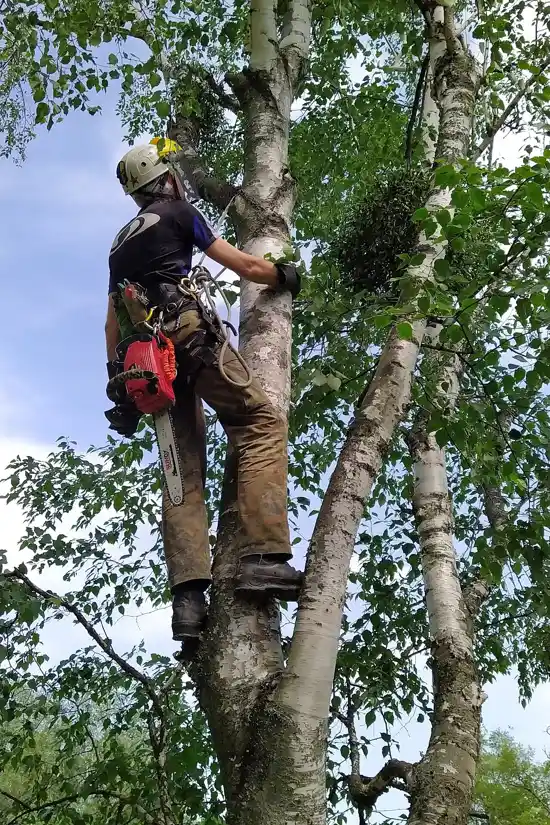
Removal quotes vary wildly for 'the same tree' and homeowners cannot tell an honest number from a guess.
Problem: Removal quotes vary wildly for 'the same tree' and homeowners cannot tell an honest number from a guess.
Solution: Cost is built from measurable factors: size, species and wood weight, condition, what stands under the tree, access, method, and the stump and disposal choices.
When to call: Get written quotes after an on-site look from insured companies - and compare the scopes line by line, not just the totals.
Ask three companies about the same oak and you may hear three numbers far apart - all, potentially, honest. Tree removal is not priced like a product; it is priced like the unique piece of rigging, labor and risk it actually is. This guide takes the quote apart factor by factor, so a Baton Rouge homeowner can read any estimate and see the tree, the yard and the method inside it - and spot the quote that skipped the looking.
The storm record is the second fact. Hurricane Gustav made a direct hit in 2008 and put much of the city in the dark for weeks under fallen trees; Isaac, Laura, Delta and Ida each took their own pass at the canopy, and every summer the afternoon thunderstorms and lightning do smaller versions of the same work. Baton Rouge tree care is therefore storm work on a schedule: the pruning, deadwood removal and risk reading that happen in the calm months decide what the violent hours find.
Height, trunk diameter and crown spread set the base of every quote, because they set the amount of wood, the number of sections, and the weight the rigging or crane must handle. Green oak runs heavy - on the order of sixty pounds per cubic foot - so a big water oak's trunk sections are multi-hundred-pound decisions, and the crew size and day length follow directly.
Species changes the arithmetic beyond size. A straight pine dismantles predictably; a spreading live oak over a house is a hundred individual rigging problems. Brittle and decayed species force smaller pieces and slower work. Two trees of identical height on the same street can honestly differ by half again on species and form alone.
A sound tree can be climbed and worked efficiently. A dead, hollow or storm-broken tree cannot be trusted under a climber, so the method escalates - lift, crane, smaller pieces, wider margins - and the price follows the method. This is the factor homeowners resist most and physics negotiates least: dead trees cost more to remove than live ones, and waiting makes both facts worse.
What stands under the tree prices the protection around the work: roof planes, pools, glass, fences, lines and the neighbor's property all shrink the acceptable margin for error and expand the plan. An identical tree in an open back acre is a simpler - and cheaper - job than its twin above a Southdowns roofline, because the second job is buying certainty, not just cutting.
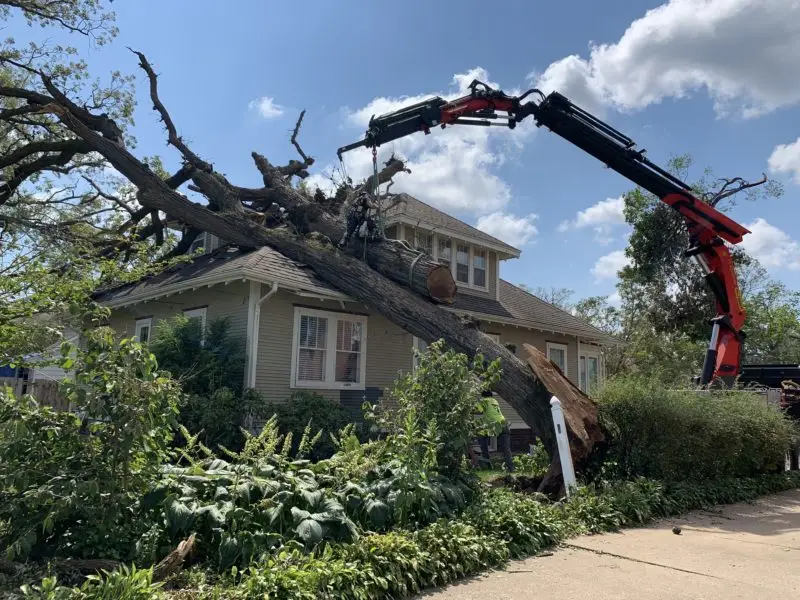

How the crew and equipment reach the tree, and how every piece leaves, can outweigh the tree itself. A front-yard tree beside the drive is a parade route; a back-yard oak behind a four-foot gate is a carry-out marathon where every section leaves by hand. Crane feasibility, lift access, and the distance to the truck are all settled at the site visit, and all of them move the number.
The finishing choices close the quote: stump ground or left, wood hauled or left for the owner's firewood pile, debris chipped on site or loaded out. Each is a real line with real labor inside it - which is why comparing quotes means comparing scopes item by item, and why the smallest total is often just the shortest scope wearing a similar font.
Get the look before the number: any company quoting a significant removal sight-unseen is guessing, and the guess will be corrected on the day - at your expense or your yard's. Written scopes that name method, stump, hauling and site condition let you compare honestly and hold everyone to the same job.
Then read for the professional signals: insurance certificates offered, the method explained in plain language, the timeline stated without pressure, and the questions they ask you - utilities, septic, soft ground, dogs, gates. A removal quote is a plan for controlled risk on your property; the company that treats it that way on paper usually treats it that way in the tree.
Homeowners understandably shop for removal the way they shop for roofing - by a unit rate. The analogy fails on the tree's individuality: no two removals share a fall zone, a condition, an access route and a method, so any unit price is either padded to the worst case or destined to be 'corrected' on site. The companies that quote from the truck window are not being efficient; they are deferring the pricing to the moment you have the least leverage.
The site-visit quote inverts the risk honestly: the company absorbs the uncertainty by looking, and the number it gives is the number the job follows. When a visit-quote and a phone-quote differ, they are not pricing the same thing - one is pricing your tree, the other is pricing a tree-shaped guess. The correction between them always exists; the only question is who pays it.
Part of any legitimate quote is invisible: the insurance premiums, the trained crew's wages, the maintained equipment, the disposal fees. Uninsured operators undercut by exactly those costs - which means their quote is lower by the amount of risk transferred to the homeowner. If an uninsured climber is hurt in your tree, or the tree lands on the neighbor's roof, the missing line items reappear as your liabilities.
Verifying is quick and never personal: ask for the certificate, note the carrier, check the dates. Reputable companies produce it as a matter of routine - many carry it on the truck. The quote comparison that ignores this line is not a comparison of prices; it is a comparison of how much risk each seller proposes that you hold.
There are honest ways to lower a removal's price, and they all trade scope, not safety. Keeping the wood eliminates the hauling line. Leaving the stump eliminates the grinding line. Scheduling in the calm season, combining several trees into one mobilization, and clearing access yourself all trim real costs. A good company will walk these levers with you openly, because each is a service genuinely not rendered.
The dishonest lever is method: climbing a tree that needs a crane, dropping pieces that need rigging, working without a ground crew. Those do not lower the job's cost; they convert it into probability. The homeowner's negotiating skill is therefore mostly discrimination - pressing on the scope lines with enthusiasm and leaving the method lines entirely alone.
The hardest removals in this metro are not the biggest trees but the most surrounded ones: the water oak that grew up through a Garden District courtyard, the pine pinned between a Mid City duplex and its lines, the dead magnolia over a Southdowns pool. Each is solved the same way - by shrinking the tree's options before the saw starts: a drop zone chosen, anchors read, an order of cuts planned so that no piece is ever free to choose its own landing. The visible work takes hours; the planning that makes it look easy is the service being bought.
That is the service side of this guide's subject. When you are ready, the Tree Removal page carries the process, the coverage by neighborhood and the number to call.
The factors that price the job live in your yard. Invite the look; expect measurements and questions.
Method, sections, stump, hauling, site condition - the list that makes quotes comparable.
Align what each quote includes; the missing line is usually the price difference wearing a disguise.
Certificates seen, lift or rigging plan understood, property protection agreed - then the date.
Site visit done before any number was discussed - measurements taken, method named
Written scope lists method, stump decision, wood and debris disposition, and final site condition
Insurance certificate seen, current, and in the company's name - not a subcontractor's
septic, irrigation, soft ground, gates, lines
The quote document itself is evidence of the company's method: it should identify the tree (species, approximate size), the removal method and why, the crew and equipment the method implies, and each finishing line as included or excluded. Quotes missing the 'why' behind the method are the ones whose day brings surprises.
Payment structure is also scope: reputable removals are paid on completion of the work as scoped, not substantially in advance. Any large prepayment request on a routine residential removal is a data point about the company, and it belongs in your comparison next to the totals.
Professionals price removals by decomposing them: wood weight by species and dimension, pieces by drop-zone geometry, hours by method and access, risk by condition and target. The site visit is where that decomposition happens, which is why the professional's quote arrives after the visit and refers to your tree specifically. When a professional explains a quote, you hear the decomposition back - that explanation, more than the total, is the quality signal the homeowner is actually shopping for.
the number is real only until the truck arrives and the tree turns out to be a tree.
the missing stump, the missing haul, the missing crane - the smallest quote is usually the shortest document.
asking a crew to climb what needs a crane converts your savings into your liability.
it removes the only leverage that ensures the scope's last line gets done.
A removal quote is a compressed plan. Read it as one - factor by factor, line by line - and the right company usually identifies itself before the totals are ever compared.
Whole neighborhoods of Baton Rouge water oaks are declining at once and owners do not know if theirs is next.
Read the GuideA thinning tree might be stressed and saveable - or dying on the inside while the crown still looks passable.
Read the GuideUsually scope, not dishonesty: one price may include stump grinding, hauling and a crane day while the other quietly includes none of them, or one company read the tree as climbable and the other read its decay correctly. Line the written scopes up side by side and ask each company to explain the other's difference - the answers are the most informative part of the process.
Demand does. After major storms, every crew in the parish is booked and triaged by danger, and discretionary work waits or prices at the market's storm rate. The calm-season removal - scheduled in winter or spring, on your timing - is where the owner's leverage lives. Another reason dead trees should not wait for the weather to choose their date.
Keeping wood removes the hauling line, and some owners value oak firewood or lumber enough to keep sections. But 'keep the wood' still means it is cut, moved and stacked somewhere on your property by someone - clarify whether that labor is in the scope, because a trunk left in rounds where it fell is a different deliverable than a stacked pile by the fence.
Choose a smaller quote among comparable written scopes from insured companies whose method you understand - that is legitimate shopping. The quote to fear is the outlier far below the field with no scope behind it: the difference will be collected later in method shortcuts, missing stump work, or a mid-job renegotiation under a half-cut tree.
One call connects you with a tree professional serving Baton Rouge and the surrounding Capital Region communities - removal, trimming, stump grinding, storm cleanup and arborist care.
📞 Call Now