Why Tree Topping Is Bad: What Baton Rouge Homeowners Should Ask For Instead
A crew offers to 'top' or 'hat-rack' your oak so it survives hurricane season - and it sounds like protection.
Read the Guide
Trees meet hurricane season exactly as they are - every defect they grew all year is the defect the storm grades.
Problem: Trees meet hurricane season exactly as they are - every defect they grew all year is the defect the storm grades.
Solution: Prepare in spring: a professional reading, structural pruning done early, hangers and deadwood down, and a photo file of every tree and the roof.
When to call: Call before the season when the reading finds splits, root movement, or dead trees in fall range of the house - those are May problems, not August ones.
Baton Rouge does not get to choose whether its trees meet a hurricane; it only chooses in what condition. Gustav rewrote this city's canopy in a weekend, and every season since has graded the yards that prepared and the yards that meant to. This checklist is the preparation that actually matters - sequenced the way arborists sequence it, in the calm months when the work is cheap, unhurried and still optional.
The ground finishes the argument. The old city sits on loess bluffs above the Mississippi - the first high ground upriver from the Gulf - while the suburbs east and south spread across flat, heavy alluvial soils that saturate in the long rains. A saturated root plate in heavy soil lets go in wind that a dry-rooted tree would shrug off, which is why the same hurricane drops trees on one street and spares the next: soil and drainage are part of every tree's real condition here.
Preparation begins with a professional reading of every tree within reach of the house - ideally in March or April, before the June 1 season opening and well before the August-September peak. The reading looks for the storm's favorite defects: codominant stems with included bark, dead and hung limbs, root plates already shifting, trunks with decay at their unions, and the previous storm's unrecorded damage.
The output should be a list, not a vibe: which trees are sound, which need pruning, which need watching, and which need to be gone before the season opens. Homeowners who have that list in April hold all the options. The same list discovered in August comes with a queue, a premium on everyone's time, and a storm already on the map.
The pruning that protects a tree in wind is structural: removing deadwood and hangers, correcting crossing and cracked limbs, reducing end weight on long lever arms, and lifting crowns off the roof plane. Done by an arborist in spring, it lowers the tree's failure odds while keeping the canopy that shades the house through the hottest months.
The pruning that endangers a tree wears the same name in the marketplace. Topping a tree before hurricane season produces a season of weakly attached regrowth on a wounded structure - the most dangerous crown configuration there is. 'Thinning it so the wind blows through' is the folk version of the same error: interior-stripped crowns sail harder at their ends. Ask for structural pruning by name, and ask what will NOT be cut.
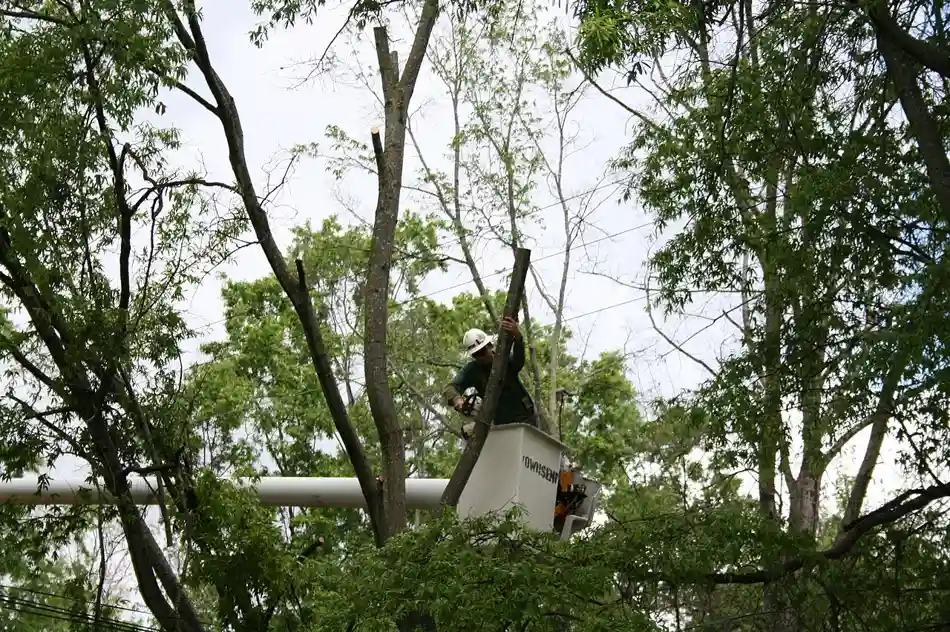

Storm prep extends below the canopy. A dead tree anywhere in fall range is removed in spring, not prayed over in August. Trees near lines are flagged to the utility's vegetation program early. Loose material - the dead palm fronds, the fallen limbs in the back corner, the firewood stack against the oak - is debris the storm will redistribute; the calm-season cleanup removes its ammunition.
Drainage belongs on the list too. Root plates fail in wind when the soil around them is soup, and Baton Rouge soil becomes soup wherever drainage has been failing quietly all year. The low corner that ponds every rain is a tree-risk item, not just a lawn complaint - flag it in the reading and fix what can be fixed before the season.
The least glamorous item is the one storm veterans insist on: photographs. Every tree from two sides, the roof from the street and the yard, the fence lines - dated, in spring, in a folder. After a storm, that file is the difference between an insurance conversation and an insurance argument, and it costs twenty minutes in April.
Add the paperwork: the arborist's report, the pruning invoice, the insurer's tree-related terms read once while the weather is calm. None of it feels urgent in spring, which is precisely the point - hurricane season prep is the discipline of doing un-urgent things before the season makes them urgent at ten times the price of attention.
Gustav's 2008 landfall remains the region's tree benchmark: the canopy damage was so general that the cleanup reorganized the city's relationship with its oaks, and the power restoration was paced by tree work for weeks. Ida's 2021 pass south of the city added the modern chapter - neighborhoods that had spent the intervening years on readings and structural pruning moved through the aftermath measurably faster than those meeting their defects for the first time in the debris.
The lesson the arborists took from both is not 'remove the trees' - the unshaded, treeless streets were not the goal anyone chose afterward. It is that the region's trees are now understood as infrastructure with a maintenance schedule, and the owners who keep the schedule experience hurricane season as weather, while the others experience it as an event.
Pre-season anxiety sorts better by condition than by species, but species priors are real. Aging water oaks carry the region's heaviest prior - short-lived, decay-prone, planted by the thousand in the same decades. Laurel oaks follow a similar, slightly longer clock. Pines fail whole - snapping or uprooting - rather than shedding parts, which makes their position relative to the house the whole question.
Live oaks carry the lightest prior of the big trees: dense wood, wind-firm architecture, and a habit of shedding limbs rather than falling whole. Magnolias drop heavy limbs and resent root disturbance; pecans shed brittle wood generously in any wind. None of this condemns or clears any individual tree - it tells the reading where to look first, which is what priors are for.
The post-storm fortnight has its own discipline, and it begins with looking up before cleaning up: hangers and split limbs are the cleanup's casualty-makers, and they are addressed before anyone works beneath them. Photograph everything before it moves - the insurer's process runs on the before pictures, and the storm's chaos is not an excuse the process accepts.
Then resist the rush's two traps. The first is the storm-chaser special: uninsured, unlocal crews whose prices and topping saws bloom after every landfall and vanish before their work is graded. The second is your own survivors: the standing trees need their reading even when the yard is full of the fallen, because the storm's delayed invoice - root shifts, internal splits - is written on the trees still shading the house.
Emergency tree work runs on triage logic borrowed from medicine: treat first what threatens life and shelter, stabilize, and defer everything that can safely wait. In practice that means the tree on the roof outranks the tree on the fence, which outranks the tree on the lawn, and a parish-wide storm simply stretches the same order across thousands of addresses. Understanding the order keeps homeowners calm in the queue - and explains why the crew that clears your drive may leave the backyard oak for the second visit.
That is the service side of this guide's subject. When you are ready, the Emergency Tree Service page carries the process, the coverage by neighborhood and the number to call.
Every tree's height is a circle on the ground. What the circle touches - roof, lines, drive, neighbor - is the prep list's order.
Professional eyes on every tree in range, findings in writing, priorities named: prune, watch, remove.
Removals first (they free the calendar), then structural pruning, then the yard cleanup and drainage items.
Dated photographs of trees and roof, the reports, and one calm read of the insurance terms.
Every tree in fall range of the house listed, with its reading date and verdict in the property file
Deadwood and hangers cleared; any tree the reading flagged for removal already scheduled or down
Roof clearance confirmed - no limb resting on or brushing the shingles anywhere
trees from two sides, roof from the street, dated this spring
A pre-season reading scoped to this guide's standard produces a written per-tree list - sound, prune, watch, remove - with the reasoning for each call and the recommended timing. It is a planning document, not a sales flyer: the prune and remove items can be quoted by any company, and the watch items carry the signs that would promote them.
Where cabling or bracing is recommended for a valued tree, the scope should name the union, the system proposed and the inspection interval for the hardware - supports are maintained equipment, not installations to forget. Ask for that interval in writing before the hardware goes in.
Professionals prepare trees the way engineers prepare bridges: against named failure modes. The reading hunts the four that storms exploit - dead and hung wood, cracked and included unions, end-heavy laterals, and compromised root plates - and the pre-season work addresses them in that order. Notably absent from the professional method: any intervention based on the calendar alone. The season is the deadline, not the diagnosis, and the crews who work storm country longest are the ones who keep that straight in May.
the hurricane special that manufactures next season's failures at this season's prices.
pre-season work done in storm week is triage, priced and chosen like it.
Pruning the survivors after the storm without reading them: shock cuts on a stressed tree, made in the rush, compound the damage.
the only prep item that cannot be done retroactively, and the one insurers ask for first.
Hurricane season in Baton Rouge is an annual examination with the questions published in advance. Do the reading in spring, prune for structure, keep the file current - and let the season grade a prepared canopy.
A crew offers to 'top' or 'hat-rack' your oak so it survives hurricane season - and it sounds like protection.
Read the GuideHomeowners inherit live oaks older than the city around them with no idea of their lifespan or what it depends on.
Read the GuideSpring - March through May. The reading, the pruning and any removals all belong in the calm months, when crews have time, trees are not yet storm-loaded, and the work can be chosen rather than triaged. A prep conversation that starts when a storm is in the Gulf is a different, narrower conversation.
Proper structural pruning does: it removes the deadwood, hangers and end-weight that wind exploits, and corrects the weak unions that split. What does not help - and actively harms - is topping or over-thinning, which trades the tree's sound structure for a flush of weak regrowth. The method is the whole difference.
Aging water oaks with union decay, any tree already leaning with compromised soil, dead trees of any species still standing in fall range, and trees carrying damage from the previous storm that was never read. The pattern matters more than the species list: defect plus target plus saturated soil is the arithmetic.
The short list: move vehicles out from under trees, bring in anything loose, photograph the property as it stands, and know where the family sleeps relative to the big trees - away from the rooms beneath them on the worst night. The tree work itself should already be done; the approach days are for the household, not the canopy.
One call connects you with a tree professional serving Baton Rouge and the surrounding Capital Region communities - removal, trimming, stump grinding, storm cleanup and arborist care.
📞 Call Now