How Long Do Live Oaks Live? Caring for Baton Rouge's Century Trees
Homeowners inherit live oaks older than the city around them with no idea of their lifespan or what it depends on.
Read the Guide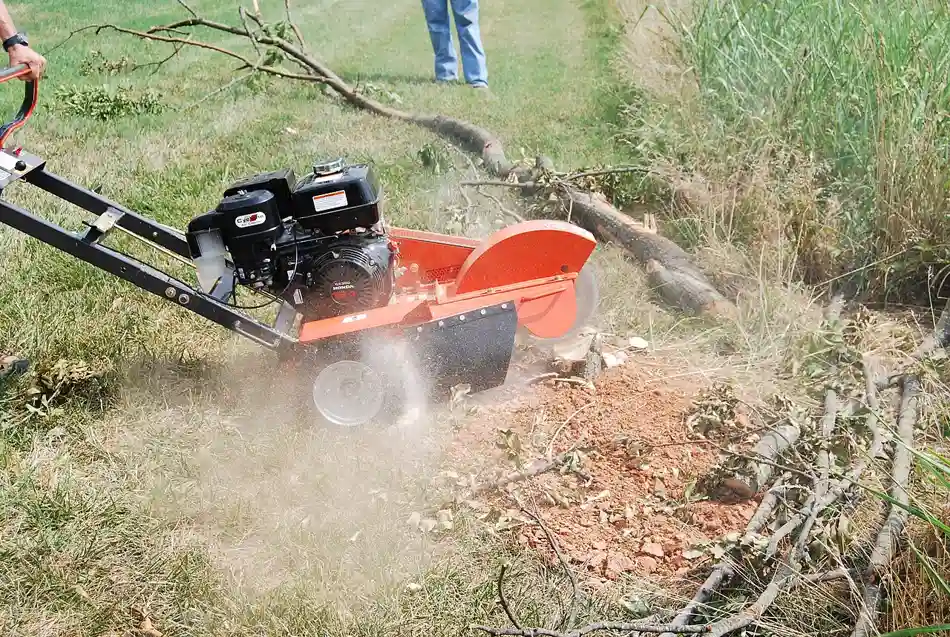
The tree is gone and the stump remains - and the two ways of dealing with it are constantly confused.
Problem: The tree is gone and the stump remains - and the two ways of dealing with it are constantly confused.
Solution: Grinding shreds the stump and flared roots below grade in place; full removal excavates the whole stump and root ball. Most yards need grinding; construction and disease change the answer.
When to call: Ask for grinding depth and footprint in writing - and full excavation when a foundation, pool or known root disease is involved.
Homeowners use 'stump removal' to mean two very different operations, and the difference is money, machinery and a hole the size of a hot tub. Stump grinding - the standard service - reduces the stump to mulch below ground level and leaves the deeper roots to rot in place. Full removal excavates the entire stump and root ball out of the earth. This guide explains what each method truly does, the Baton Rouge conditions (clay, tallow, ganoderma) that tip the choice, and the questions that keep the scope honest.
The storm record is the second fact. Hurricane Gustav made a direct hit in 2008 and put much of the city in the dark for weeks under fallen trees; Isaac, Laura, Delta and Ida each took their own pass at the canopy, and every summer the afternoon thunderstorms and lightning do smaller versions of the same work. Baton Rouge tree care is therefore storm work on a schedule: the pruning, deadwood removal and risk reading that happen in the calm months decide what the violent hours find.
A grinder's wheel chews the stump down through the root flare to a working depth - eight to twelve inches below grade is the residential standard - and a good operator chases the flared buttress roots outward until the whole aboveground architecture is mulch. The result: no stump, no sprouting base, ground ready for backfill, turf or a bed. What remains below is the deeper root system, severed from its energy source, rotting on a multi-year schedule underground where it harms nothing.
The misunderstandings cluster at the edges. Grinding is not excavation: the hole left is grinding-depth, filled with the chip-and-soil mix, not a crater. The grindings themselves are a material to plan - a cubic yard or more from a big oak, useful as mulch, or hauled per the scope. And depth is a number to get in writing: a 'grind' that kisses the surface leaves the root crown alive a few inches down, where it will be met again by the next fence post.
Excavation removes the evidence entirely: machine or winch pulls the stump and root ball out whole, leaving a void that must be backfilled with real soil and compacted in lifts if anything will be built or paved over it. It is heavier work with heavier machinery, more ground damage around the site, and a disposal problem the size of the root ball itself.
The cases that justify it are specific. Construction over the spot - a foundation, a pool, a slab, a driveway - cannot tolerate a buried, slowly rotting root system that will settle. Known aggressive root disease argues for taking the inoculum out rather than leaving it beside the replacement tree. And a stump in the way of a utility trench or a fence line's posts needs to be gone, not merely shorter. Outside those cases, excavation buys depth the yard will never use.

Local soil writes footnotes to both methods. In the east-side clays, an excavated hole backfilled badly becomes a bathtub that holds water against whatever was built - compaction of the fill, in layers, is not a detail. In the same clays, ground stumps settle gently and predictably, one more argument for the standard method in residential ground.
The regrowth argument cuts the other way in tallow and hackberry country: an unground stump of either species is a shrub factory. Grinding's depth matters doubly here - the root crown must be fully destroyed, or the owner trades one stump for a thicket. And where the dead tree carried ganoderma, the grinding conversation properly includes the neighbors: the fungus's next host is chosen from the living roots nearby, and the arborist's eye on them is part of the job.
Ask four questions in order. What is going on this spot - lawn and beds (grind), or structure and slab (excavate)? What killed the tree - ordinary age (grind), or root disease (lean excavate, and ask the arborist)? How big is the stump - grinding scales gracefully to the largest oaks, while excavation's hole scales frighteningly? And what does the written scope actually promise - depth, footprint, grindings, backfill? Those answers produce the method, and the method produces honest quotes from any company asked.
Owners worry that a ground stump's site will sink, and the honest answer is calibrated: a shallow depression of an inch or two over the first years is normal as the chip fill consolidates and the surface roots soften, and it is cured by a wheelbarrow of soil in the third spring, not by engineering. What does not happen with a proper grind is the dramatic sinkhole of folklore - that belongs to buried whole stumps and un-compacted excavations, the two things this guide's methods exist to avoid.
Where settlement genuinely cannot be tolerated - under the slab, the pool, the pavers - the answer is not deeper grinding but the excavation discussed in the guide, with fill compacted in layers and, for structures, compacted to a specification. Matching the method to the tolerance is the whole craft of the decision.
A large stump yields a startling volume of grindings - the stump's whole mass, fluffed with soil. The standard dispositions each have their logic: spread as mulch in the beds (where they are genuinely good, aged a little first), hauled away entirely (the clean-slate option, a real line in the scope), or mounded over the site to settle (the patient owner's option). The mistake is leaving the disposition unspoken and discovering the crew's default with a yard full of chips.
One caution belongs to the mulch use: fresh oak grindings from a diseased tree are not innocent. Where the tree died of root disease, the grindings carry the fungus's home address, and spreading them under the surviving trees is poor strategy. The scope conversation for a diseased tree includes where its remains are allowed to go - often, off the property entirely.
The modern yard is a buried utility map: irrigation laterals, low-voltage lighting, invisible-fence wire, septic lines and the utility services themselves all live in the grinder's working depth somewhere. The professional protocol is boring and absolute - 811 locate before the job, owner's own systems flagged from memory and sprinkler plans, and the operator briefed on anything the maps cannot know. Most grinding damage stories begin with a skipped step in that list, not with the machine.
Depth discipline finishes the protocol: the operator who knows a gas line crosses the corner of the flare grinds that corner by the numbers, not by habit. It is one more place where the written scope and the five-minute pre-job conversation outperform a rushed bid's hurry - the buried world rewards the crews who ask about it.
A stump is not inert: it is a root system still wired to the soil, and in Baton Rouge's case, usually wired to fungi as well. Water oak stumps in particular become ganoderma conks' favorite address, and the fungus does not respect property lines between a dead stump and the living roots that graft near it. Grinding to depth breaks the colony's food supply and its bridge to the living canopy - a plant-health argument for the grinder that has nothing to do with lawns or looks.
That is the service side of this guide's subject. When you are ready, the Stump Grinding & Removal page carries the process, the coverage by neighborhood and the number to call.
Lawn, bed and replanting point to grinding; foundations, pools and slabs point to excavation.
Root disease changes the calculus - get the arborist's call before choosing the cheap default.
Depth below grade, flare footprint, grindings fate, backfill duty - the four lines that define 'done.'
Clay drainage, access for the machine, buried utilities located - the details that keep the day boring.
lawn and beds, or structure and slab
Cause of the tree's death known - and the method adjusted if roots carried disease
811 locate requested; irrigation, septic and private lines flagged from your own records
spread as mulch, mounded to settle, or hauled
The grinding scope should state depth below grade as a number, confirm the flared buttress roots are included across the full footprint, and name the surface-root chasing the job includes. 'Stump grinding' without those three specifics is a service description, not a scope - and the difference is usually discovered at the next fence post.
The excavation scope, where chosen, should state backfill explicitly: whose soil, compacted how, to what finish grade. An excavation quote silent on backfill has left its largest labor item unpriced, which means it has left it to you.
Professionals choose the method from the spot's future and the tree's past, in that order, and they say the quiet parts aloud: the depth number, the footprint, where the grindings go, and what the buried roots will and will not do over the next decade. On diseased trees they widen the conversation to the surviving canopy - because the stump is evidence in a plant-health case that may not be closed. The professional signature on stump work is that nothing about the deliverable is discovered afterward.
Burying a whole stump under a new lawn or slab: the sinkhole stories all start exactly there.
chip soil starves and desiccates a young tree in its first summer.
the grinder's wheel is honest machinery - it treats a gas line exactly like a root.
Spreading a diseased tree's grindings under its neighbors: mulch with a return address, delivered free.
Grind for the yard you have; excavate for the structure you are building; and let the cause of death argue where it deserves to. Decided in that order, the stump question answers itself.
Homeowners inherit live oaks older than the city around them with no idea of their lifespan or what it depends on.
Read the GuideTrees meet hurricane season exactly as they are - every defect they grew all year is the defect the storm grades.
Read the GuideNo. Severed from the stump and crown, the buried roots have no energy source and simply decay in place over several years. What can grow is the stump itself if any living crown tissue survives a shallow grind - which is why the depth and footprint belong in the written scope. Surface roots far from the stump occasionally sprout in vigorous species like tallow; a proper grind of the flare prevents the main event.
Yes, with two adjustments: offset the new tree a few feet from the old stump's center where the space allows (the old root zone is full of settling chips and busy fungi), and excavate the planting hole properly, replacing chip-heavy soil with real soil. Planting directly into pure grindings starves and dries a young tree - the most common replant failure on old stump sites.
Root-ball sized: for a mature oak, think several feet deep and wider than the canopy's drip was at the trunk - a serious excavation requiring serious backfill. Owners are routinely surprised, because the stump above ground is the smallest part of the structure. It is the right hole when construction demands it, and a lot of hole to fill for a lawn's sake.
With the standard precautions: utility locates called in before the work (the free 811 service), irrigation lines flagged by the owner, and the operator told about anything buried the maps do not show - septic components especially. Grinding is shallow work by excavation standards, but its wheel does not distinguish a root from a conduit, so the locating step is the whole safety system.
One call connects you with a tree professional serving Baton Rouge and the surrounding Capital Region communities - removal, trimming, stump grinding, storm cleanup and arborist care.
📞 Call Now